Category: Bookkeeping

  • Benefits for Growing Startups

    outsource law firm accounting services

    Singapore supports a wide range of accounting and finance services, particularly for regional headquarters and compliance-heavy operations. Access talent with 18+ years average PQE, for up to 50% less than top law firms. Reports and financial data are available whenever they are needed for review. Easy access allows firm leaders to make quick and informed decisions.

    • Is your firm searching for a Cloud solution, but in need of a feature-rich and robust platform?
    • With the right tools in place, our virtual trust accounting services keep client funds protected, records clear, and compliance on track.
    • We provide accurate data, insights, and recommendations so firm leadership can make informed financial decisions with confidence.
    • Hiring more people may initially seem like a sign of your firm’s health, but recruiting, training, and managing your own financial staff can actually slow your growth.
    • It involves designing a finance operating model that aligns with Brazilian labour law (CLT), payroll regulations, and statutory reporting requirements.
    • Our team ensures your law firm trust accounting service works smoothly across all platforms.

    Why Law Firm Should Conisder Legal Administration Outsourcing?

    This helps improve legal business performance by boosting profitability, improving efficiency, and supporting long-term growth. Not to be considered as tax, legal, financial or HR advice. Regulations change over time so please consult a lawyer, accountant  or Labour Law  expert for specific guidance.

    • Mexico combines regulatory enforcement, skilled accounting talent, and nearshore scalability making it suitable for long-term finance operations when structured correctly.
    • Outsourced accounting helps compare actual results with budgeted figures.
    • Rather than trying to manage these tasks yourself, outsourcing allows you to rely on experts who understand the unique requirements of real estate accounting.
    • Experts guide money tasks while founders focus on growth.
    • The way Tarsus works, by emphasizing the right data at the right time to drive growth and equity value, adds to the advisory services already offered by Cherry Bekaert.

    Tax Filing Support

    outsource law firm accounting services

    Mexican labour law strongly protects employees, and payroll compliance is tightly regulated. Outsourcing accounting https://www.yuks.co/law/the-primary-aspects-of-bookkeeping-for-law-firms/ in Mexico has become a governance-critical decision in 2026 rather than a cost-driven one. An Employer of Record acts as the legal employer while you retain operational control. EOR manages employment contracts, payroll, social security, and compliance, allowing risk-free team building. An Employer of Record acts as the legal employer of Brazil-based accounting professionals, while the client company retains operational control.

    Outsourced Accounting Firms vs Dedicated Mexico Accounting Teams

    outsource law firm accounting services

    Our clients’ legal teams supervise the legal Bookkeeping for Law Firms work of the Axiom lawyer. All firm expenses, case costs, and payments are recorded on a daily basis. Office expenses, filing fees, research costs, and vendor bills are categorized correctly. This creates a strong foundation for reporting and compliance. We have experience in properly setting up and submitting e-bills (LEDES) to over a dozen different e-billing (LEDES) software platforms.

    • That means you get exactly the level of support you need without paying for more than what’s necessary.
    • Many outsourced accounting providers integrate their services with the best real estate brokerage software, giving investors access to powerful tools without additional licensing fees.
    • Let our accountants handle the numbers while you concentrate on legal matters.
    • Easy to read data supports planning, budgeting, and long term growth decisions.
    • For CFOs focused on scalable and compliant European growth, this governance-first approach is now the standard.
    • Is your law firm struggling to cope with complex accounting rules and regulations?

    Common Misconceptions About Outsource Accounting Services

    Our expertise in law firm accounting services helps you maintain financial records and stay compliant with ever-changing regulations. Our team knows legal industry standards, ethics rules, and trust account regulations. This helps avoid mistakes and stay compliant with bar requirements.


    outsource law firm accounting services

  • Adjusting Journal Entries: Examples, Types, and Their Purpose

    what is the purpose of adjusting entries

    Understanding the nuances of making adjusting entries in different accounting systems requires specialized knowledge and training. This highlights the importance of continuous learning and professional development for accountants and financial professionals. Prepaid expenses require adjustments to reflect the expense in the period it pertains to, rather than when it was paid. While adjusting entries are commonly made at the end of an accounting period, they can also be made in the middle of a period if needed.

    what is the purpose of adjusting entries

    Interim Periods

    As a small business owner, you probably find yourself juggling multiple roles, just like John, who runs a busy retail store in Austin. Between managing inventory, assisting customers, and ensuring his team is motivated, John barely has time to breathe. Adjusting entries for estimates are made to account for items that are typically not known with certainty until a later date, such as depreciation, amortization, and bad debt expense. HighRadius leverages advanced AI to detect financial anomalies with over 95% accuracy across $10.3T in annual transactions. With 7 AI patents, 20+ use cases, FreedaGPT, and LiveCube, it simplifies complex analysis through intuitive prompts. Backed by 2,700+ successful finance transformations and a robust partner ecosystem, HighRadius delivers rapid ROI and seamless ERP and R2R integration—powering the future of intelligent finance.

    what is the purpose of adjusting entries

    What is an example of an adjusting entry?

    For example, if an adjustment entry is made to increase revenue, this will increase the business’s profitability for that period. Conversely, if an adjustment entry is made to increase expenses, this will decrease the business’s profitability for that period. Prepaid insurance is insurance that has been paid for but not yet used. To record prepaid insurance, an adjusting entry is made to decrease the asset account and increase the corresponding expense account. The revenue recognition principle requires businesses to recognize revenue when it is earned, regardless of when payment is received.

    • Adjusting entries plays a vital role in the accounting cycle, which is the process of recording and processing all financial transactions within a specific accounting period.
    • Maintain thorough documentation for all adjusting entries, including the reason for the adjustment, supporting calculations, and any relevant references to accounting standards.
    • This transaction is recorded as a prepayment until the expenses are incurred.
    • To record a prepaid expense, an accountant would debit an asset account and credit a liability account.
    • Adjusting entries provides a mechanism to correct these errors without altering the original entries.
    • It is usually not possible to create financial statements that are fully in compliance with accounting standards without the use of adjusting entries.

    Adjusting Entry for Unearned Income

    • To better understand how adjusting entries work, let’s go through a practical example.
    • An adjusting journal entry is made to record this incremental, non-cash transaction for each accounting period within the lifespan, at the end of which the value of the asset will have reached zero.
    • The point is to make your accounting ledger as accurate as possible without doing any illegal tampering with the numbers.
    • Reviewing several examples helps accountants catch timing errors, compare patterns across periods, and verify whether accrued items or deferrals have been properly updated.
    • The $25,000 balance in Equipment is accurate, so no entry is needed in this account.

    The software can automate parts of the process and generate financial statements for you. However, you’re still responsible for ensuring that adjusting entries are accurate and completed on time. The software simplifies the task but doesn’t eliminate the need for careful oversight and accuracy. This includes not just the obvious outlays, but also accrued expenses such as payroll and services received but not yet billed. For example, if a adjusting entries examples computer repair needed at the end of February is not invoiced until March, the expense should still be recorded in February to reflect the true costs incurred during that month. Common examples include accruals of revenues or expenses that have been earned or incurred but not yet recorded, and adjustments for prepaid expenses, such as insurance, that should be apportioned over time.

    Cash Flow

    A word used by accountants to communicate that an expense has occurred and needs to be recognized on the income statement even though no payment was made. The second part of the necessary entry will be a credit to a liability account. The $25,000 balance in Equipment is accurate, so no entry is needed in this account. As an asset account, the debit balance of $25,000 will carry over to the next https://bluebeauty.mmindsdemo.com/columbus-ohio-cpa-firm-accounting-tax-and-business/ accounting year. The $1,500 balance in the asset account Prepaid Insurance is the preliminary balance. The correct amount is the amount that has been paid by the company for insurance coverage that will expire after the balance sheet date.

    what is the purpose of adjusting entries

    Thus, your bill for July is $4,000, but since you won’t be billing your clients until August 1, you’ll have to adjust the entry to amass the $4,000 you earned in July.

    what is the purpose of adjusting entries

    For example, if an adjustment entry is made to adjust the balance of a particular account that is related to a specific fiscal year, this will impact the financial statements for that fiscal year. Amortization is the allocation of the cost of an intangible asset over its useful life. To record amortization, an accountant would debit an expense account and credit an accumulated amortization account. For example, if a company has received payment for services that it has not yet provided, an adjustment entry is needed to record the revenue earned but not yet received.

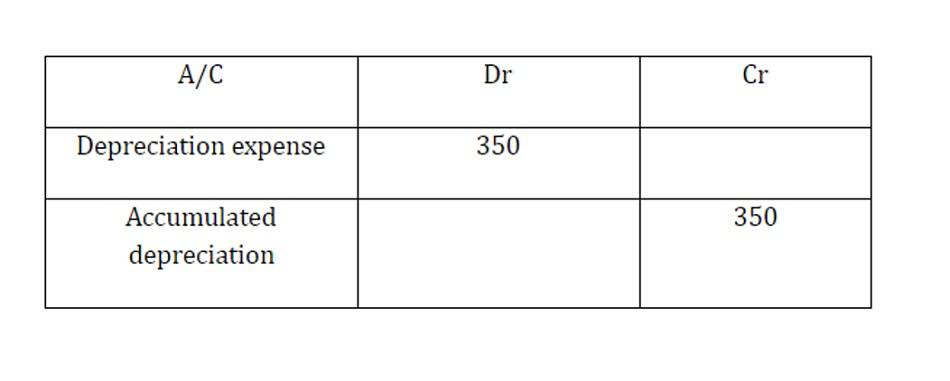
    • To illustrate how depreciation expense is computed, let’s use the straight-line method in our example for easier understanding.
    • Under this arrangement December’s interest expense will be paid in December, January’s interest expense will be paid in January, etc.
    • In accrual accounting, it’s imperative to record revenues and expenses when they are earned or incurred, irrespective of when cash is exchanged.
    • For example, if an adjustment entry is made to defer revenue to a future accounting period, this will delay the recognition of revenue until the future period.
    • The contra asset account which accumulates the amount of Depreciation Expense taken on Equipment since the equipment was acquired.
    • To do so, you’ll have to use an adjusting journal entry, debiting Accounts Receivable and crediting Accrued Revenue.

    Because Bad Debts Expense is an income statement account, its balance will not carry forward to the next year. Bad Debts Expense will start the next accounting year with a zero balance. To determine if the balance in this account is accurate the accountant might review the detailed listing of customers who have not paid their invoices for goods or services.

    Balance Sheet

    Adjusting entries are necessary to ensure that your financial statements reflect the actual financial position of your business at the end of an accounting period. Without these data entries, your income, expenses, assets, and liabilities may be misstated, leading to inaccurate financial reporting. An accrued revenue is the revenue that has been earned (goods or services have been delivered), while the cash has neither been received nor recorded. The revenue is recognized through an accrued revenue how is sales tax calculated account and a receivable account.

  • Expert Legal Bookkeeping Services for Law Firms

    law firm bookkeeping service

    Law firms deal with unique financial challenges that regular bookkeeping services don’t handle very well. Their financial complexity comes from uneven billing cycles, trust accounting requirements, and the need to analyze profitability by practice area. Law firms can now get expert financial guidance without hiring a full-time chief financial officer by using contract CFO services.

    Supports better decisions

    law firm bookkeeping service

    In-house CFOs become part of your leadership team and ensure continuous financial management. They shape the strategic direction of capital investment, operational efficiency, and overall profitability. Flexibility supports long term growth without disruption.

    • We handle complex transactions and reconciliations accurately.
    • When should a law firm consider engaging remote CFO services?
    • Monitoring cash flow helps ensure funds are available for daily operations.
    • Law firms face new financial complexities as they evolve.
    • Our virtual setup avoids location limits and keeps collaboration smooth.
    • An in-house CFO costs about $400,000 plus benefits yearly, while virtual CFO services range from $3,000 to $10,000 monthly.

    Profit + Peace™ for Law Firms Starts Here

    Access talent with 18+ years average PQE, for up to 50% less than top law firms. Law firms face short-term financial challenges that need fractional CFO support. Studies show many firms collect only a fraction of invoiced amounts. The need becomes clear when firms plan expansion through lateral hires, new offices, or additional practice The Importance of Professional Bookkeeping for Law Firms areas. Financial leadership is a crucial investment whatever model you pick.

    Cash flow and working capital management

    law firm bookkeeping service

    For this reason, experienced legal and accounting services for trustees and executors are not simply helpful—they are often essential. By consolidating tasks, calendars, email, and billing in one platform, you reduce administrative overhead and improve operations. This means that law firms can take on more billable work, without the hassle of manual processes. Learn more about how CosmoLex increases productivity on our Law Practice Management page. Using these tools, we help reduce errors and improve control over client funds. Automated checks, real-time updates, and clear dashboards make it easy to track trust balances.

    Meet Our Legal Talent

    • Benefits, bonuses, and overhead costs add to this investment.
    • We handle payroll calculations, deductions, filings, and reports.
    • Smart CFOs create flexible cash flow projections that help plan for different scenarios and prepare for unexpected events.
    • That is where professional Trust accounting for law firms becomes essential.
    • This structured approach helps law firms maintain financial clarity even as case volumes increase.
    • • Firms generating $2-10 million in revenue benefit most from virtual CFO services, while larger firms exceeding $10 million can justify full-time financial executives.

    What will separate leaders from followers is the ability to market AI as a strategic advantage, not a technical feature. This means crafting a narrative that emphasises outcomes, demonstrates governance, and reinforces the human element behind the technology. Firms that succeed will not only attract clients but also command premium positioning in a market where trust and clarity matter more than ever. With Meru Accounting, your firm can focus on legal work while we handle the financial operations efficiently. This improved focus often translates directly into increased revenue and stronger client retention—key contributors to profitability.

    law firm bookkeeping service

    Many law firms try to manage payroll and taxes internally, but as teams grow and regulations change, the process becomes complex, slow, and stressful. That is where professional tax services for law firms make a real difference. CosmoLex stands out from other legal practice management solutions by offering a unique combination of features specifically designed to meet the needs of law firms. It is an end-to-end cloud-based platform that integrates practice management, billing, accounting, and trust accounting in a way that is seamless, secure, and user-friendly.

    law firm bookkeeping service

    The outsourced accounting team uses the same process for all offices. This ensures consistent data entry, billing, and reporting. You must get a full picture of their legal industry experience, pricing structure, communication practices, and track record before choosing a remote CFO provider. The right financial partner understands your specific challenges and provides flexible solutions that match your firm’s goals and growth path. You should really look into potential providers’ backgrounds, experience, education, and expertise before making a commitment.

  • Conversion cost: What is Conversion Cost and How to Calculate It

    conversion cost formula

    By calculating the conversion cost per unit or per output measure, managers can compare the performance and productivity of different production units, departments, or divisions. Managers can then use this information to allocate resources, set goals, reward or motivate the workers, or make outsourcing or insourcing decisions. Yes, conversion costs can change based on factors like labor rates, overhead expenses, and efficiency improvements. assets = liabilities + equity Cost of goods sold is the total cost of the goods that are sold during a period.

    • Conversion Cost Variance is a metric used to assess the variance between the actual conversion costs incurred and the budgeted conversion costs.
    • These costs can also help companies identify any wastage within the production process.
    • You can use tools such as google PageSpeed insights, google Mobile-Friendly test, and GTmetrix to measure and improve the performance and responsiveness of your website.
    • Efficient cost management can lead to enhanced operational decisions, investment in cost-effective processes, and improved resource allocation.
    • When the component costs and the conversion costs of a product are combined, they represent a lower threshold value at which the product is generally sold.
    • In short, it is the cost of a product incurred by a company while manufacturing it.
    • By optimizing the landing page design, simplifying the checkout process, and adding customer testimonials, they reduce bounce rates by 20% and increase conversions by 15%.

    How to Increase or Decrease the Cost of Goods Sold?

    Add low performers as negative keywords and allocate more budget to those driving conversions. When the cost to acquire a new customer is near or above their lifetime value, that’s a red flag—it’s time to revisit the strategy and execute significant campaign optimization protocols. A conversion cost formula good average Cost Per Conversion varies by industry but should be significantly lower than the customer’s lifetime value. Marketers are on the right track if it costs less to get a new customer than they’ll ultimately spend. In the next page, we will do a demonstration problem of the FIFO method for process costing.

    • Fixed overhead includes property taxes on the factory building and depreciation on factory equipment.
    • The cost of goods manufactured, on the other hand, includes all the costs that are transferred from the raw materials inventory and the work in process inventory to the finished goods inventory.
    • Cost of conversion and cost of goods sold are both reported on the income statement of a manufacturing company.
    • Examples include steel in construction, plastic in injection molding, or flour in baking.
    • Also, they follow specific strategies like investing in technology, reducing material waste, and others to help them reduce conversion costs and improve efficiency.
    • They want to set the right pricing to attract customers while ensuring profitability.
    • The cost of a product is determined by the amount of labor and overhead needed to convert raw materials into finished goods.

    Advantages and Disadvantages of Conversion Costs

    Hence, using conversion costs is an efficient way of calculating equivalent units and per unit costs rather than separately calculating direct labor and manufacturing overheads. Prime costs are calculated based on the direct labour costs and the total cost of the raw materials. The conversion cost is a metric in cost accounting that establishes the total expense a manufacturer incurs to transform raw materials into a finished, salable product. This figure represents the costs directly related to the production process itself, excluding the initial expenditure on raw materials.

    Conversion Cost vs Prime Cost

    conversion cost formula

    Direct labour costs may include salaries, wages, bonuses, taxes, benefits, overtime, etc., paid to production workers. As mentioned, there are two components that contribute to the conversion costs that companies incur. Some units might be partially complete during the manufacturing https://baovedongsaigon.com/10-types-of-employee-reimbursements-explained/ process, and others might be complete. This is so because the materials are added in different quantities and at different stages of production.

    conversion cost formula

    Without proper control, it can lead businesses into financial ruin if not managed properly by management teams who know what’s best about how much each item should retail for. The advantages and disadvantages of using conversion cost as a performance indicator. At the California Learning Resource Network (CLRN), our mission is to provide educators with high-quality, well-reviewed educational tools and resources. By curating and aligning digital learning materials with academic content standards, we empower teachers, students, and educational institutions to enhance learning outcomes. Our goal is to simplify the process of discovering the best educational technologies, guiding educators toward innovative, impactful solutions that improve the classroom experience. Want to improve your clients’ landing page conversion rates by tapping into AI’s analytical prowess?

    • Total Conversion Cost refers to the overall expenses incurred during the process of converting leads or prospects into paying customers.
    • Also, various services like production processes, production reports, and others are done smartly with cost-effectiveness.
    • The cost of conversion is calculated for each production department, while the cost of goods manufactured is calculated for the whole company.
    • The conversion of materials into a finished product is what we call “conversion.” It’s an important process that happens at every stage in the manufacturing cycle.

    This includes tallying both direct labor costs and manufacturing overheads. By calculating conversion costs, businesses can develop more effective product-pricing models. Understanding the full cost of production, including direct labor and manufacturing overhead costs, allows companies to price their products competitively while maintaining profitability. The cost of conversion is a crucial aspect in manufacturing inventory management. It refers to the expenses incurred during the production process, specifically the transformation of raw materials into finished goods.

    conversion cost formula

    Also, it helps the company to make effective business decisions that suit its profit margin. Moreover, understanding conversion costs will help to set targets for revenue, expenses, and profits for the manufacturing business. You can assess the effectiveness of your ad campaigns and determine the success of your marketing strategy. Direct labor costs refer to the wages paid to workers directly involved in production. These individuals operate machinery, assemble products, and perform other labor-intensive tasks. Calculating direct labor cost involves multiplying the total hours worked by the labor rate (hourly or per unit).